Inside Hailey Bieber's Rhode Welcome Email: A 7-Step Breakdown


I subscribed to Rhode a while back. Then this welcome email landed in my inbox, and I read it three times before I closed the tab.
Not because the design blew me away. It's actually pretty minimal. Black and white. No flashy graphics. But the structure underneath it is doing a lot of quiet, deliberate work. So I pulled it apart, step by step, to see exactly what's happening.
Step 1: The Hero Doesn't Sell.
The email opens with "Welcome to the world of rhode." Not "shop now", or a product photo with a price tag under it. They talked about the community that they built.

That word choice matters. Most people aren't discovering Rhode by accident. They're coming because of Hailey. So the brand doesn't fight that, it leans straight into it. You're not being sold a moisturizer in the first ten seconds. You're being invited somewhere, in their community/ cult.
Step 2: The Founder Note Comes Before the Product
Right after the welcome, there's a quote signed by Hailey herself. "Our philosophy is to make one of everything really good."

This is the part most brands skip or bury three sections deep. Rhode puts it right up front, because the founder's voice is the actual product here. You're not buying skincare from a faceless company. You're buying into a philosophy that a specific, recognizable person put her name on. That signature at the bottom i's the whole reason half the list subscribed. They came for Hailey Bieber Rhode.
Step 3: The USP Dump
Five lines. Vegan. Cruelty free. Gluten free. Dermatologist tested. Available fragrance free.
No paragraphs explaining each one. No persuasive copy trying to convince you. Just facts, stacked, fast.
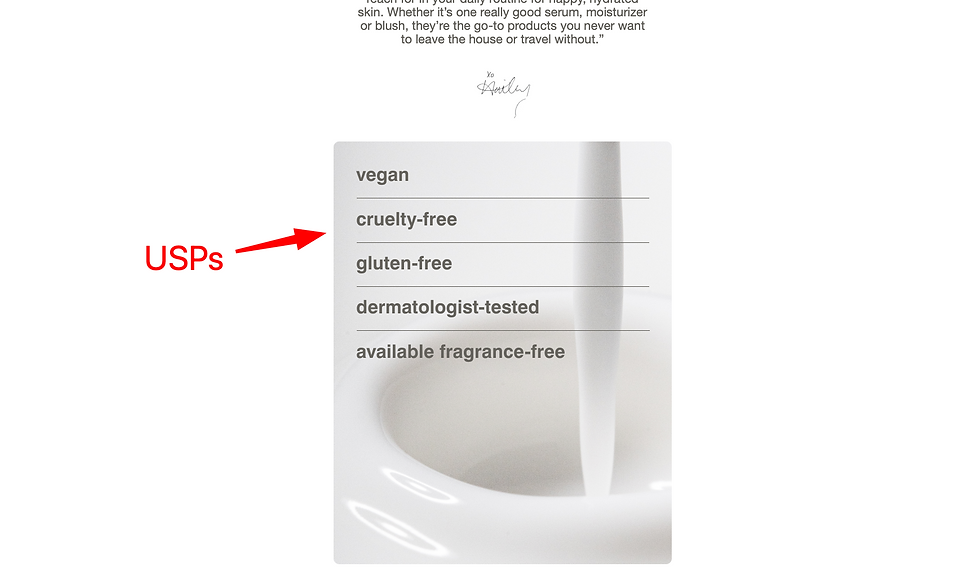
This is Rhode answering objections before you've even had the chance to raise them. Sensitive skin? Covered. Ethical sourcing? Covered. It reads less like a features list and more like a checklist of trust, and checklists get skimmed and believed a lot faster than paragraphs get read and questioned.
Step 4: The CTA Sells a Habit (Not a Purchase)
Here's the part I keep coming back to. The button doesn't say "shop now" or "buy the glazing milk." It says "start your Rhode routine."
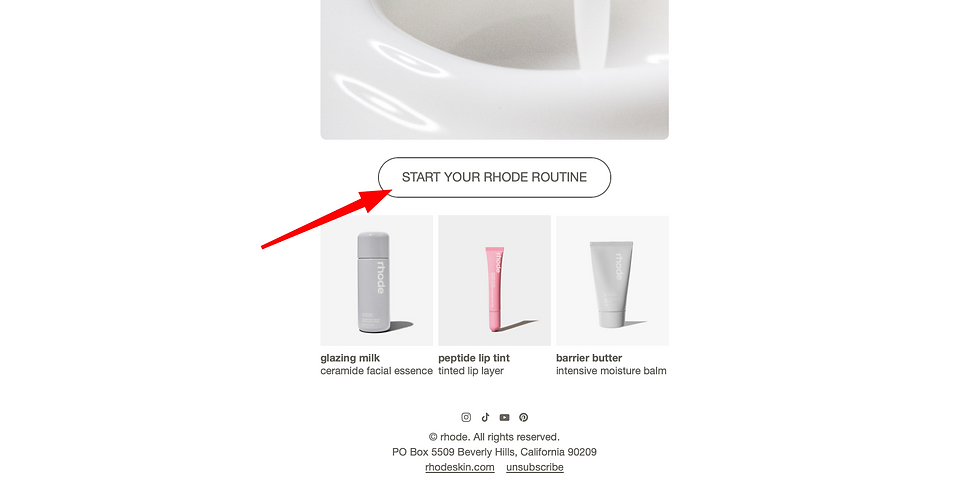
That's a completely different ask. A purchase is a single transaction. A routine is a daily ritual you build your life around. Once you frame the CTA as a routine, you're not asking for one sale. You're asking to be let into someone's morning and night, every single day, indefinitely.
Step 5: CTA to The Landing Page Transition

Click that CTA button and you don't land on a shop page. You land on a hero video of Hailey walking through her own routine, using her own products, in her own bathroom.
Founder-led video isn't rare in DTC anymore, but the placement here is smart. It's the first thing you see after clicking, not something buried on an About page. Again, founder led brands peak utilization. It reinforces step 2 all over again. The face sells before the formula does.
Step 6: If You Skip the Video, There's a Backup System
Not everyone watches. Rhode knows that. So underneath the video, there's a simple, step-by-step routine breakdown: Cleanse, Prep, Glaze, Comfort, Nourish.

Each step names a suggested product, but the framing stays educational. It reads like "here's what step three is for," not "buy this now." You're being taught a system. The product recommendation is just attached to the lesson.
Step 7: The End Goal Is Total Replacement
Once Rhode becomes your daily routine, step by step, every other product in your bathroom cabinet becomes the outlier. You stop comparing Rhode to a serum you might buy someday. You start comparing everything else to Rhode.
That's the actual endgame of this email. It was never about closing one sale. It was about closing a habit.
Is Anyone Else Doing This?
Sort of, but rarely with this level of intent. A few comparisons worth noting:
Function of Beauty opens its welcome email with a founder note before pushing customers toward a quiz, which is a similar "story before sale" instinct, though the quiz drives personalization rather than a fixed routine.
Duradry leans hard on founder story too. The brand's founder shares his own struggle with sweating as the reason the product exists, which builds the same kind of personal trust Rhode goes for, just without the celebrity halo doing extra work.
Seen, a skincare brand, uses a founder signature and a personal, letter-style format in its welcome flow, which mirrors Rhode's tone almost exactly on a smaller scale.
What almost nobody else does as cleanly is step 6, the full routine-as-system approach where every single product is mapped to a specific moment in your day. Most brands stop at "here's our bestseller." Rhode built an entire onboarding sequence designed to replace your whole routine, not just win one purchase.
That's the real takeaway here. A welcome email isn't just a chance to introduce a product. Done right, it's the first move in convincing someone to restructure a daily habit around your brand. Rhode didn't try to make a sale in this email.
They tried to make themselves unavoidable.
There you go. This is the breakdown of Rhode's welcome email. Steal this framework. Start using it today. I am Ahad Khaled signing off. See you in another one.



Comments